CHROMIS

Metamorphosis timing and characteristics in the spiny chromis

Chromis

Project at a glance

2024-ongoing

Banyuls-sur-Mer (FR)

Acanthochromis polyacanthus

Eco-Evo-Devo

Embryonic development

Ecophysiology

Behavioral ecology

Endocrinology

Context

Most marine fishes have a bipartite life cycle: larvae disperse in the pelagic environment before returning to coastal habitats, where settlement coincides with a profound larva-to-juvenile metamorphosis. This transition involves coordinated morphological, physiological and behavioural changes, many of which are controlled by thyroid hormones and can be disrupted by environmental stressors.

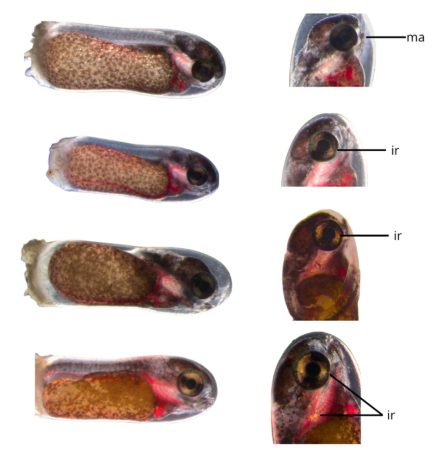
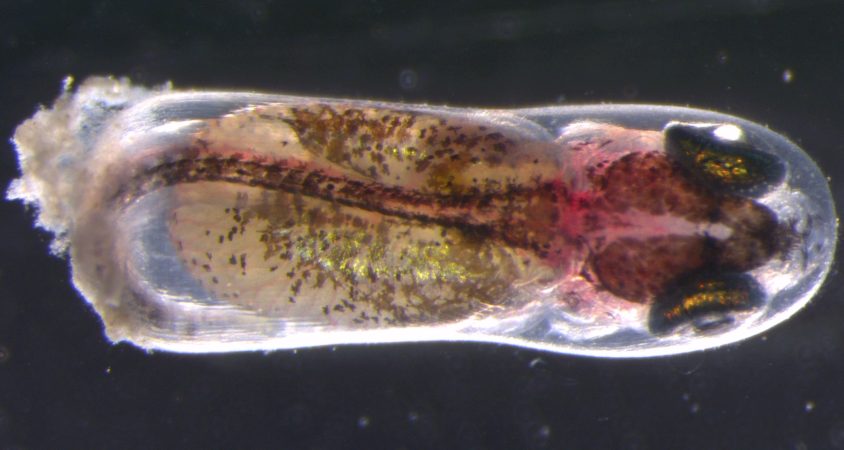
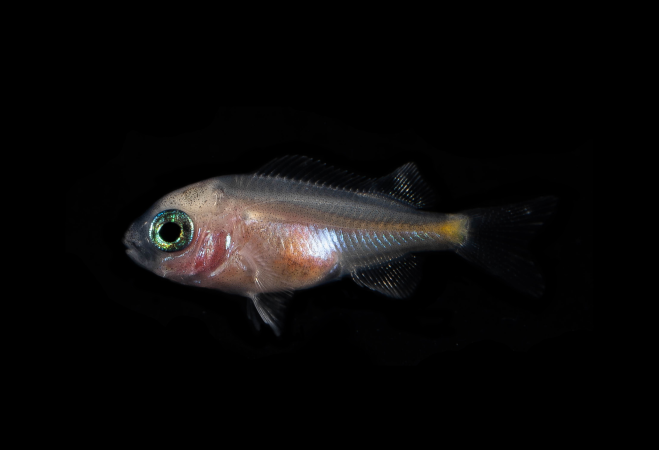
The spiny chromis, Acanthochromis polyacanthus, represents a remarkable exception. It has no pelagic larval stage: embryos develop in benthic eggs guarded by their parents, and hatchlings remain around the parental nest before settling nearby. Unlike most reef fishes, no conspicuous post-hatching metamorphosis has been described. Preliminary endocrine observations therefore led to an intriguing hypothesis: what hatches from the egg may already be a metamorphosed juvenile rather than a conventional fish larva.

CHROMIS investigates whether metamorphosis in A. polyacanthus occurs during embryonic development, and develops new physiological and behavioural tools to characterise this unusual life-history strategy.

Objectives

Exploring an unusual developmental route from fish embryo to juvenile

CHROMIS combines developmental biology, endocrinology, ecophysiology and behavioural ecology to determine when metamorphosis occurs in A. polyacanthus and how its completion can be characterised. The project also establishes an experimental system in which eggs can be maintained in small, controlled volumes, opening new opportunities to study the vulnerability of fish early development to environmental stressors.
Key questions

1. Does the spiny chromis undergo metamorphosis before hatching?

CHROMIS tests whether the endocrine events normally associated with marine fish metamorphosis occur during embryonic development in A. polyacanthus. Thyroid hormone dynamics and the expression of key components of the thyroid signalling pathway are used to identify whether a metamorphic transition takes place within the egg.
Chromis1

2. What functional abilities are already present at hatching?

If metamorphosis is completed within the egg, newly hatched fish should already display functions normally acquired during the larva-to-juvenile transition. CHROMIS therefore examines early swimming performance together with visual and olfactory responses to determine how functionally mature hatchlings are immediately after emergence.
FeaturedImageProjectCHROMIS

3. Can this peculiar life cycle provide a new model for marine fish ecotoxicology?

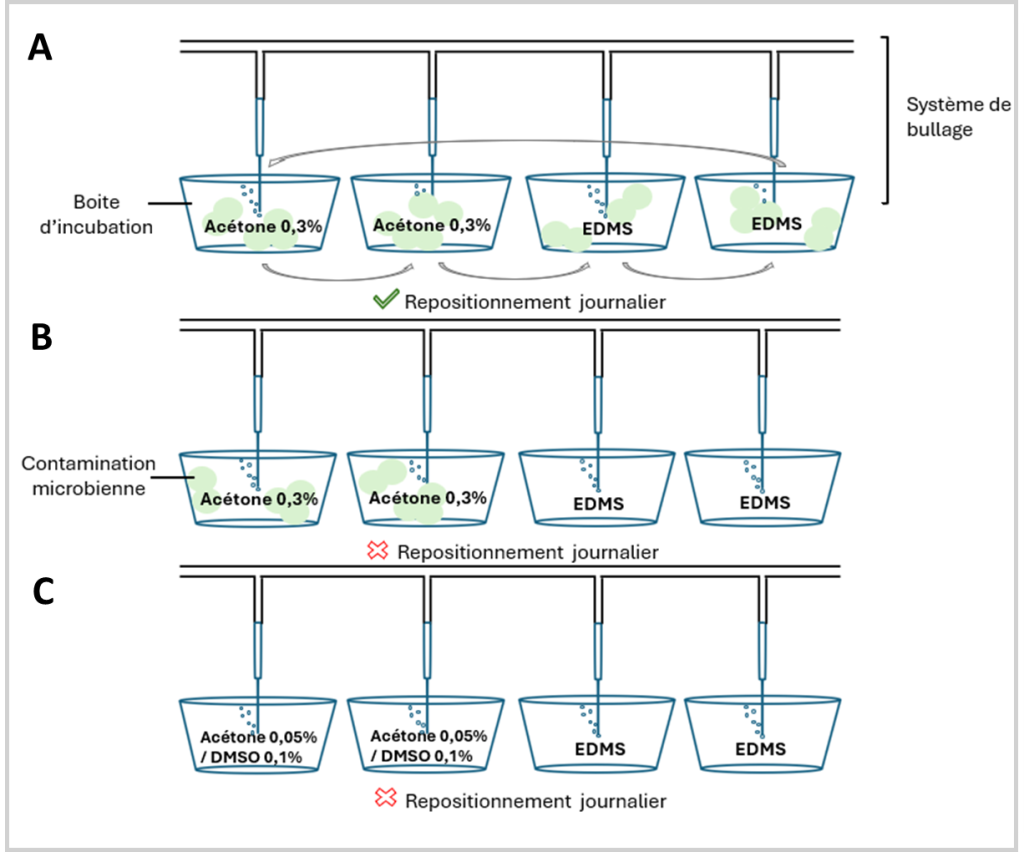
Because A. polyacanthus embryos can be maintained in small, controlled volumes without the complex feeding requirements of conventional marine fish larvae, CHROMIS explores their potential as an experimental model for testing environmental stressors during a critical developmental transition.

From developmental diversity to experimental opportunity

Its absence of a pelagic larval stage makes A. polyacanthus exceptional among coral-reef fishes. By potentially shifting metamorphosis from the free-swimming larval stage into embryonic development, this species offers a natural contrast to conventional marine fish life cycles and a powerful system for asking which aspects of metamorphosis are conserved across very different developmental strategies.
CHROMIS uses an unusual life-history strategy to address both a fundamental and an applied question: how flexible is metamorphosis across marine fishes, and how can this diversity help us understand its vulnerability to environmental change? Establishing reliable developmental and functional biomarkers in the spiny chromis provides the foundation for future experimental work on pollutants and other anthropogenic stressors affecting fish early life stages.

Project team and partners

BIOM - CNRS, Sorbonne Université

Marc Besson - Coordinator
Laurence Besseau
Julie Lherbeil
Thomas Tottoli

Service Mutualisé d'Aquariologie de l'OOB - Sorbonne Université

Pascal Romans
Valentin Logeux
Thomas Tottoli

Funding

Tremplin 2024 - FSI Sorbonne Université

Tremplins nouveaux entrants & nouvelles entrantes de la FSI
CHROMIS
2024-2025

EcoEvoDevo - Internal funding

Continuation of the CHROMIS project supported through the team's own research funds.
CHROMIS
Since 2025

People involved in the EcoEvoDevo team

Related News

Related Publications

Interested in this research?

Our projects regularly involve Master students, PhD candidates and postdoctoral researchers interested in marine Eco-Evo-Devo, ecotoxicology, behaviour and integrative biology.