SENSO

Sensory ecology of clownfish-anemone mutualism and environment–hormone dialogue in the control of metamorphosis

Project at a glance

2019-2025

Banyuls-sur-Mer (FR)

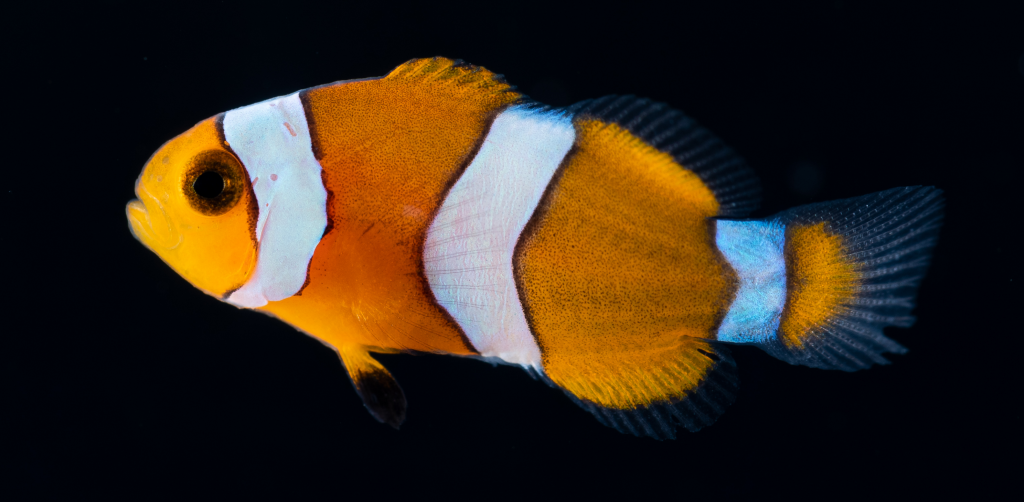
Amphiprion ocellaris

Chemical ecology

Developmental biology

Neuroendocrinology

Transcriptomics

Context

Throughout their life cycle, animals undergo major developmental transitions that must occur at the appropriate time and under suitable environmental conditions. Environmental information such as temperature, light or chemical cues is perceived by sensory systems and integrated with internal physiological signals to coordinate these transitions through neuroendocrine pathways.

In coral reef fishes, one of the most critical transitions occurs at the end of the pelagic larval phase. Larvae must locate a suitable habitat, recruit to the reef and undergo a profound metamorphosis into juveniles. This transition involves major morphological, physiological and behavioural changes and is essential for juvenile survival and the maintenance of adult fish populations.

Using the clownfish Amphiprion ocellaris as a model, SENSO investigates how environmental information is perceived and translated by the neuroendocrine system into the hormonal signals that trigger metamorphosis.

Objectives

Deciphering how environmental information controls a major life-history transition

SENSO combines experimental ecology, transcriptomics and functional endocrinology to determine how external environmental information is progressively converted into the physiological signals controlling clownfish metamorphosis. The project follows this process from the identification of relevant environmental factors to their integration by the nervous system and, ultimately, to the activation of the neuroendocrine pathways that initiate larval transformation.
Key questions

1. Which environmental factors are responsible for the induction of larval metamorphosis?

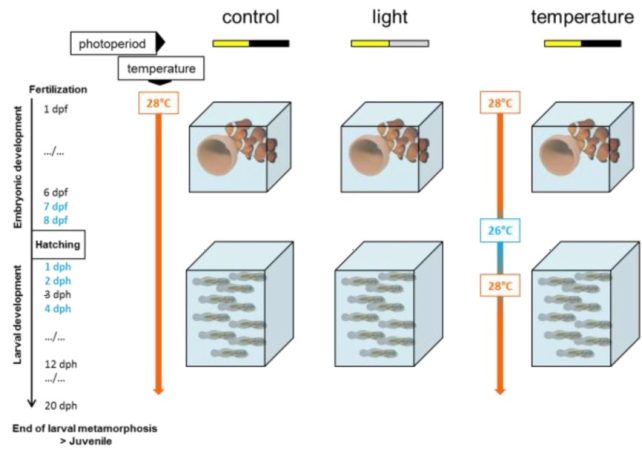
We investigate which environmental parameters can stimulate, inhibit, accelerate or delay metamorphosis in Amphiprion ocellaris, focusing particularly on light, temperature and chemical cues associated with host sea anemones and conspecifics.
senso1

2. How is environmental information integrated within the nervous system?

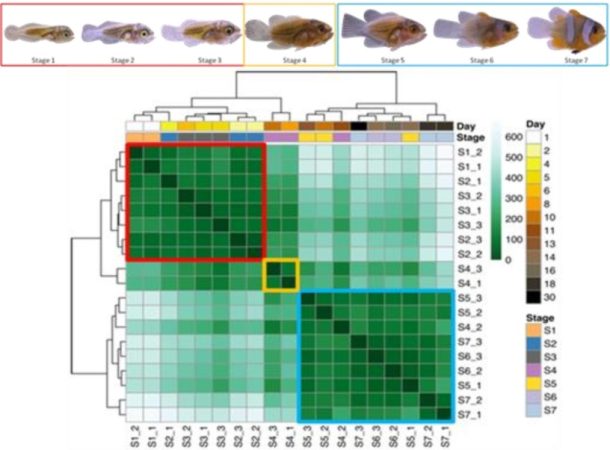
We investigate the changes in gene expression induced by environmental factors that affect metamorphosis, in order to identify the molecular pathways through which external information is processed by the developing nervous and neuroendocrine systems.
senso2

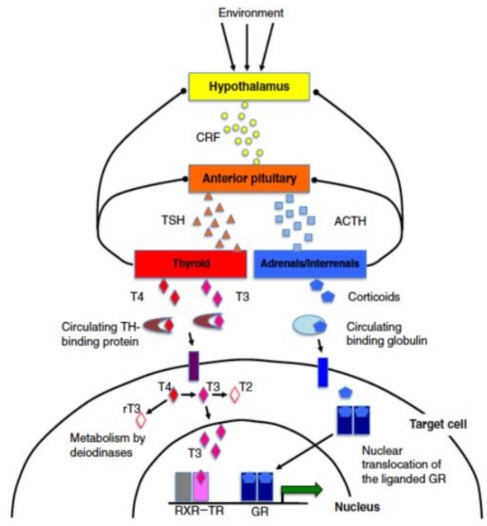
3. How do neuroendocrine signals control the onset of larval transformation?

We examine how environmentally induced signals activate the neuroendocrine pathways controlling metamorphosis, with particular attention to the hypothalamic–pituitary system and thyroid hormone signaling.
Laudet V. The origins and evolution of vertebrate metamorphosis. Curr Biol. 2011 Sep 27;21(18):R726-37

Why clownfish?

Amphiprion ocellaris provides a particularly powerful model for investigating the environmental control of metamorphosis. Its complete life cycle can be reproduced under controlled laboratory conditions, which is unusual among coral reef fishes, allowing environmental factors to be experimentally manipulated while development is followed precisely. SENSO also benefits from a detailed description of post-embryonic development and a reference transcriptome covering the successive developmental stages of the species.

Linking ecology and developmental physiology

SENSO bridges two levels of biological organisation that are often studied separately: the ecological signals used by larvae during metamorphosis and the molecular and hormonal mechanisms controlling their developmental transition. By integrating chemical ecology, behaviour, transcriptomics and neuroendocrinology, the project aims to understand how environmental information is translated into an appropriate developmental response, while providing a mechanistic basis for investigating how environmental change may disrupt this critical stage of the fish life cycle.

Project team and partners

BIOM - CNRS, Sorbonne Université

Laurence Besseau - Coordinator
Mélanie Dussenne - Postdoc
Charles-Hubert Paulin
Michaël Fuentes

OOB - Service Mutualisé d'Aquariologie

Pascal Romans
Valentin Logeux
Nancy Trouillard

Funding

French National Research Agency - ANR

AAPG 2019 - PRC
ANR-19-CE14-0010
2019-2025

People involved in the EcoEvoDevo team

Related News

Related Publications

Interested in this research?

Our projects regularly involve Master students, PhD candidates and postdoctoral researchers interested in marine Eco-Evo-Devo, ecotoxicology, behaviour and integrative biology.