


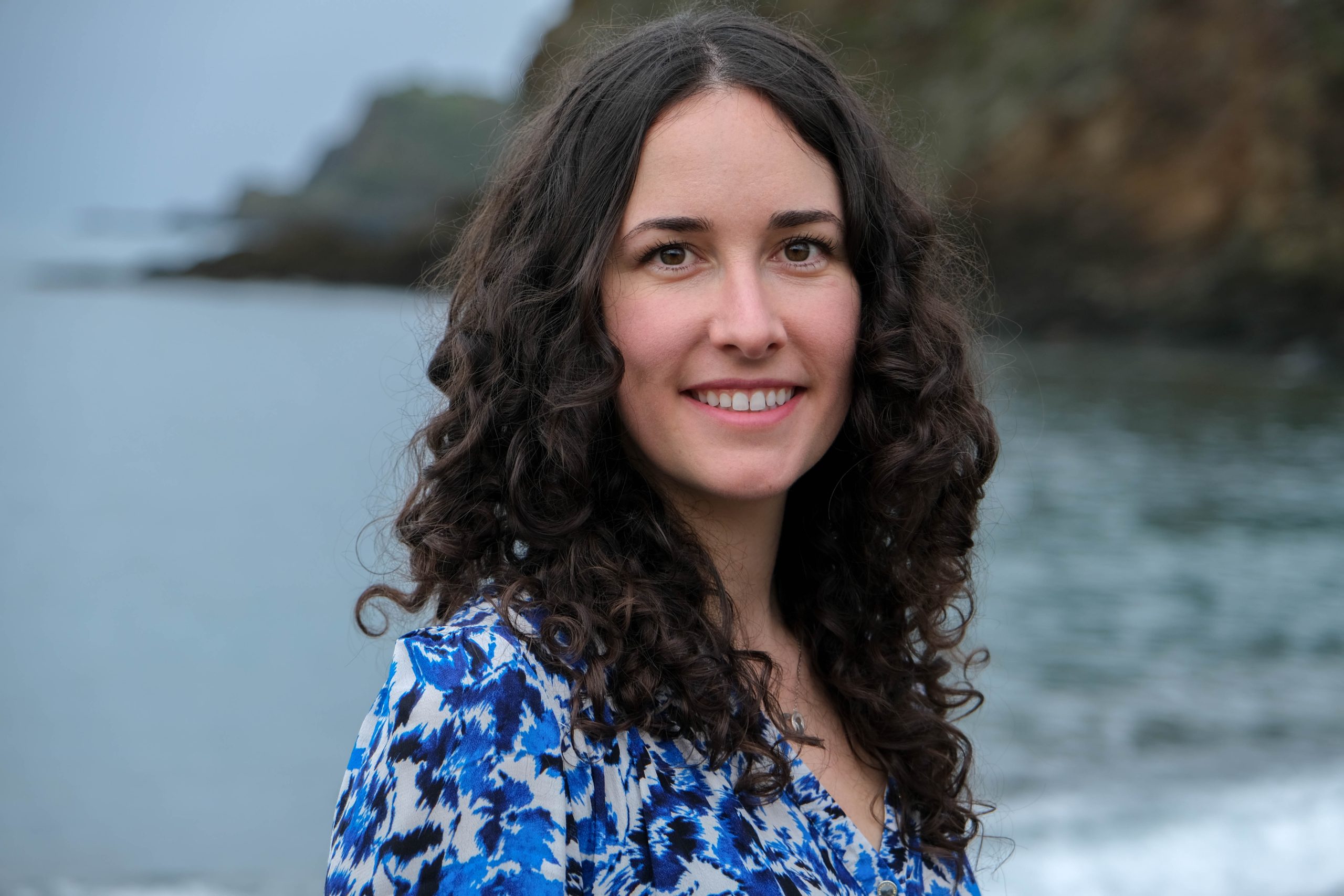
Janice Lombard
Master student
2026-2029
Banyuls-sur-Mer (FR)
Acanthochromis polyacanthus
Boops boops
Chromis chromis
Diplodus annularis
Diplodus sargus
Diplodus vulgaris
Salaria pavo
Sarpa salpa
Eco-Evo-Devo
Ecotoxicology
Ecophysiology
Behavioral ecology
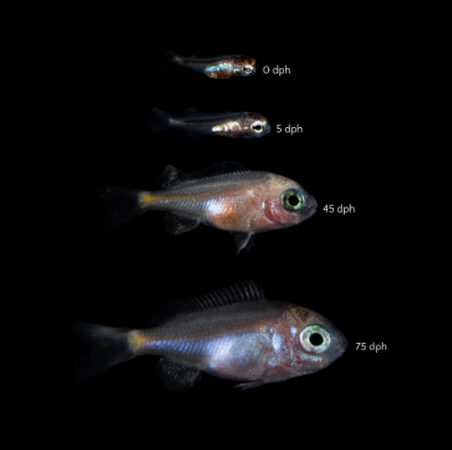
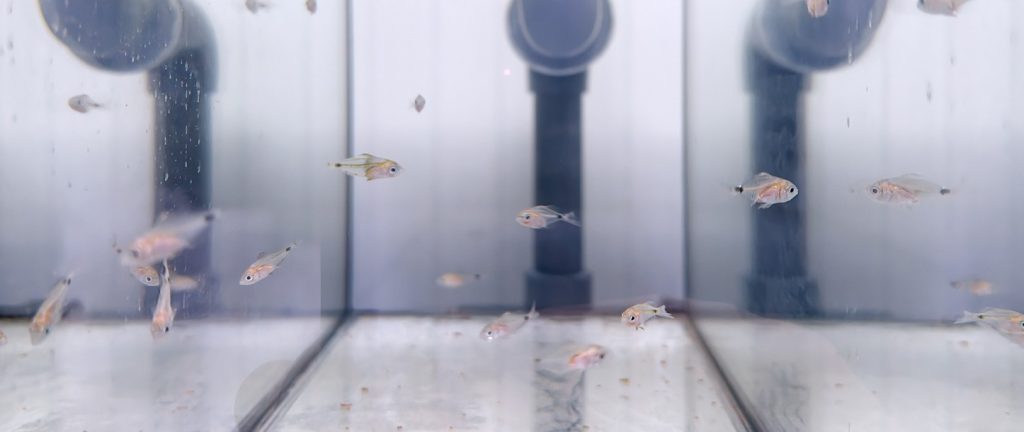
Most marine fishes have a bipartite life cycle in which a dispersive pelagic larval phase is followed by more sedentary juvenile and adult stages in coastal habitats. The transition between these two environments – larval recruitment – is a critical life-history step that generally coincides with metamorphosis, during which larvae undergo major morphological, physiological and behavioural transformations.
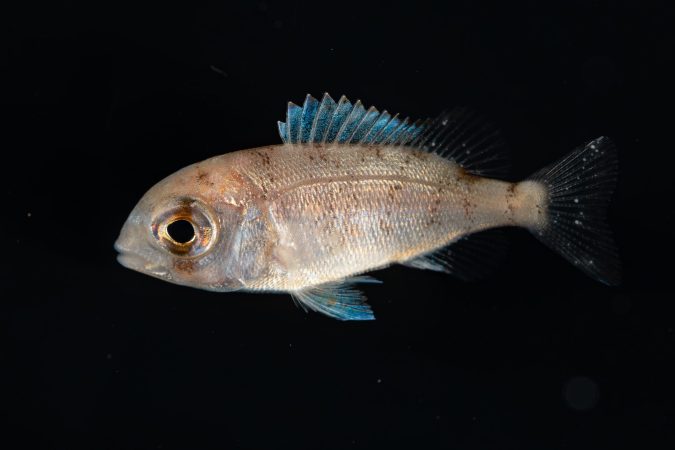
Recent work has shown that these transformations are coordinated by endocrine pathways and that disrupting these mechanisms can compromise juvenile performance and recruitment success. Yet this knowledge remains based on only a handful of species, despite the remarkable diversity of recruitment strategies observed among marine fishes. Some species undergo rapid and conspicuous metamorphic changes, whereas others display much more gradual or limited transformations.
FRAMES asks whether this diversity in recruitment and metamorphosis strategies reflects different underlying physiological and endocrine mechanisms, and whether these different strategies also determine how vulnerable species are to environmental change and pollution.
FRAMES develops a comparative and integrative framework across multiple marine fish species, combining developmental biology, endocrinology, ecophysiology, behaviour and experimental ecotoxicology. By examining species that differ markedly in the timing and magnitude of their larva-to-juvenile transformation, the project aims to identify both the mechanisms generating this diversity and the characteristics that make some recruitment strategies more vulnerable than others.
The project investigates how endocrine signalling is translated into coordinated developmental, physiological and behavioural transformations during recruitment. Functional experiments are used to test whether apparently different metamorphic strategies rely on conserved mechanisms or on species-specific regulatory pathways.
Master student
Assistant engineer

PhD Student

Maître de Conférences
Research technician

Maître de Conférences
