
Lola Matrand
Master student
2023-2026
Banyuls-sur-Mer (FR)
Toulouse (FR)
French rivers and coastal waters
Acanthochromis polyacanthus
Aquatic ecotoxicology
Plastic pollution
Ecophysiology
Developmental biology
Plastic pollution is now found throughout marine ecosystems, from rivers and coastal waters to the open ocean. As larger debris fragments into increasingly small particles, micro- and nanoplastics can persist in the environment, interact with marine organisms and act as carriers or sources of chemical contaminants, including compounds with endocrine-disrupting properties.
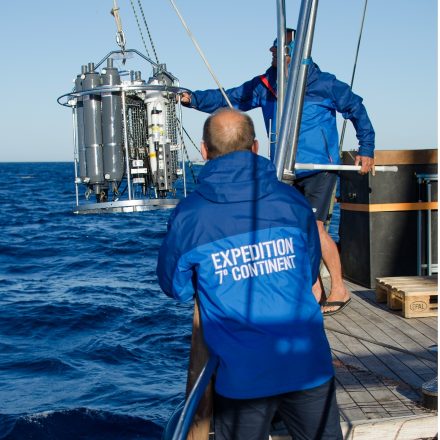
EXPLORATION BLEUE investigates this problem directly in the natural environment. Scientific expeditions collect plastics from rivers, coastal waters and offshore environments, from the surface down to 100 m depth, while complementary chemical and biological approaches characterise their fragmentation, associated contaminants and interactions with marine biodiversity.
By connecting environmental plastic contamination with experimental ecotoxicology, EXPLORATION BLEUE asks not only where plastic-associated pollutants occur, but whether environmentally relevant exposure can translate into measurable biological effects on marine organisms.
EXPLORATION BLEUE combines environmental chemistry, microbial ecology and experimental ecotoxicology to investigate the fate and biological consequences of plastic pollution. Within this multidisciplinary framework, at EcoEvoDevo we focus on the effects of plastic-associated contaminants during early fish development, from embryogenesis to functional performance at hatching.
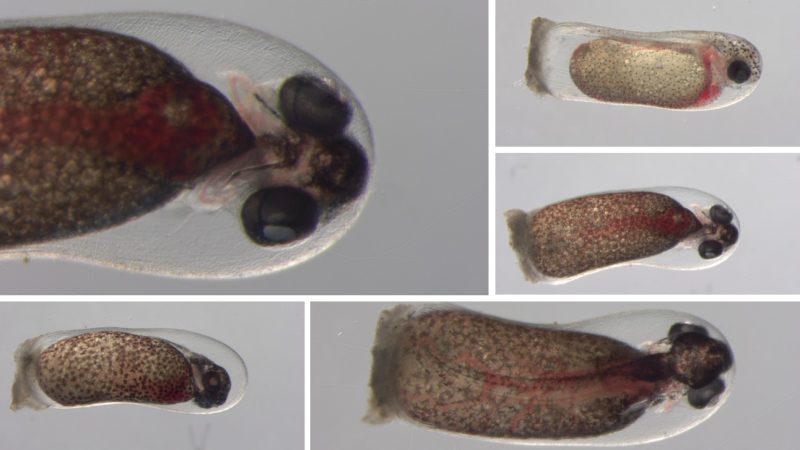
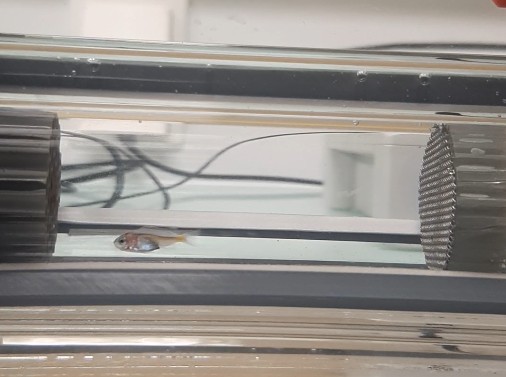
At EcoEvoDevo, experimental ecotoxicology assays are conducted on embryos of Acanthochromis polyacanthus to determine whether exposure to contaminants associated with plastic pollution disrupts early development. Effects are assessed through embryo survival, cardiac activity and the progression of key developmental traits, including pigmentation and organ formation.