RECREAFISH

Recreational pressures and their impacts on Mediterranean coastal fish communities

Project at a glance

2026-2030

Banyuls-sur-Mer (FR)

Montpellier (FR)

Paulilles, Port-Vendres (FR)

Sète (FR)

Chromis chromis

Sarpa salpa

Fish ecology

eDNA

Fish ecophysiology

Deep learning classification models

Environmental sociology

Marine conservation

Context

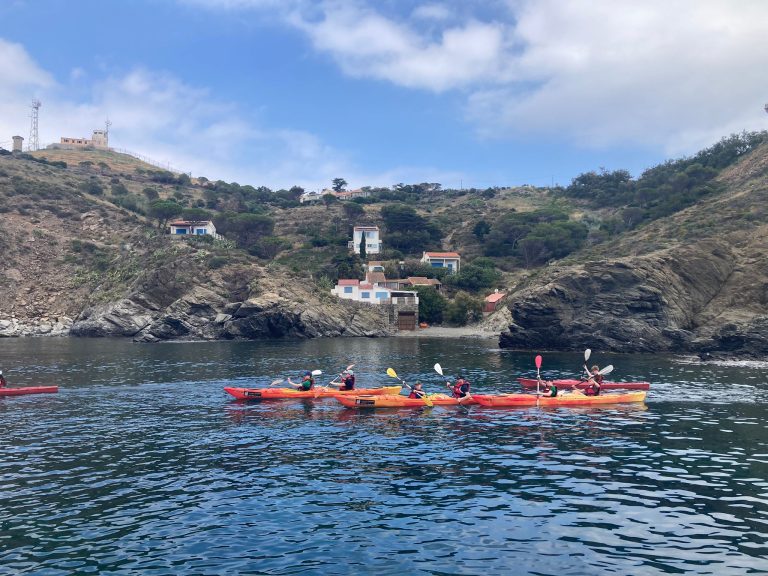
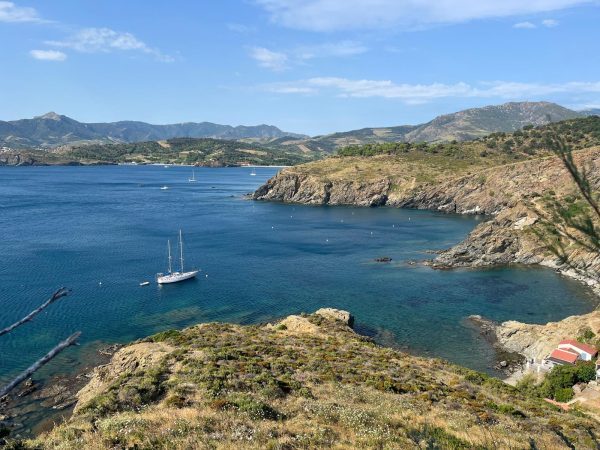
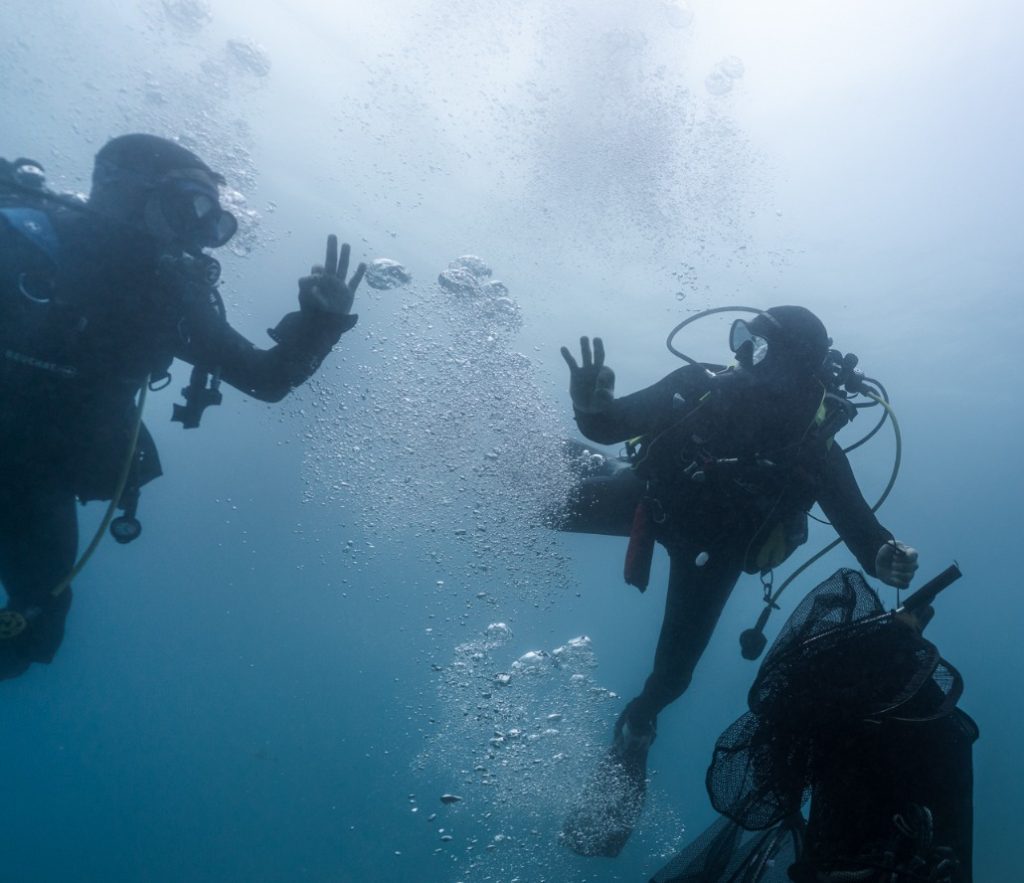
Mediterranean coastal ecosystems are exposed to many long-standing anthropogenic pressures, but the rapid growth of marine recreational activities adds another dimension that remains comparatively poorly understood. Snorkelling, scuba diving, recreational fishing, spearfishing, kayaking, paddleboarding and motorised boating intensify markedly during summer, including inside Marine Protected Areas that attract visitors precisely because of their preserved landscapes and biodiversity.

Current monitoring generally describes visitor numbers, water quality or damage to benthic habitats, but provides a much less detailed picture of how recreational uses vary through space and time, how they are perceived by users and managers, and how they affect fishes. Human presence, fishing and underwater noise may influence individual stress, growth and development, but also fish behaviour, abundance and community composition. RECREAFISH therefore approaches Mediterranean coastal areas as socio-ecosystems, in which human uses and ecological responses must be studied together.

RECREAFISH brings together environmental geography, sociology, fish biology, microbiology and ecology to compare sites experiencing contrasting recreational pressure before, during and after the summer peak. These interdisciplinary observations will provide new indicators and methods for the sustainable management of highly visited coastal ecosystems. RECREAFISH asks how recreational activities shape Mediterranean coastal socio-ecosystems, from human uses and perceptions to the physiology, development and biodiversity of fishes.

Objectives

From recreational pressure to biological and ecological responses

RECREAFISH combines field observations, interviews, underwater acoustics, environmental DNA, automated video monitoring and integrative fish biology. The same coastal sites are repeatedly surveyed under contrasting levels of recreational use, making it possible to connect patterns of human pressure with responses observed from individual fishes to entire communities.
Key questions

1. Where and when are recreational pressures strongest, and how are they perceived?

RECREAFISH characterises the intensity and spatial distribution of recreational activities together with their associated underwater noise. Geographic and sociological approaches further investigate how users and managers perceive coastal ecosystems, existing regulations and the environmental consequences of their activities.
RECREAFISH5

2. How do recreational activities affect fish biology?

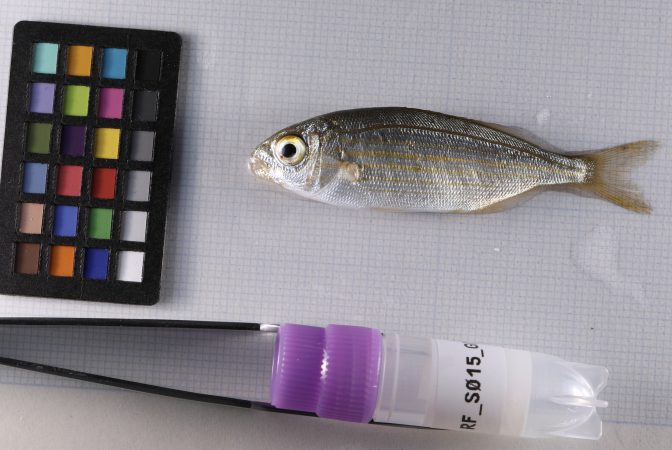
Two complementary model species, Sarpa salpa and Chromis chromis, are used to investigate whether contrasting levels of recreational activity translate into biological effects. The project combines indicators of acute and chronic stress, growth, gut microbiota and individual condition. At EcoEvoDevo, we particularly focus on body condition, morphology and pigmentation in both species and to the thyroid-hormone-controlled metamorphosis of C. chromis.
RECREAFISH6

3. Do recreational pressures reshape fish communities?

RECREAFISH examines whether heavily frequented areas differ in fish richness, abundance and acoustic activity. Environmental DNA provides broad estimates of species composition, long-duration underwater videos quantify the abundance of key species using deep-learning algorithms, and passive acoustics assesses changes in the biological soundscape across sites, seasons and levels of recreational pressure.

Why Sarpa salpa and Chromis chromis?

These two abundant Mediterranean coastal fishes represent contrasting ecological and life-history strategies. Juvenile S. salpa are herbivorous fishes recruiting during the winter season and which strongly depend on shallow nursery habitats during summer for juvenile growth, whereas C. chromis is a planktivorous species whose larval recruitment and metamorphosis occur in shallow coastal environments during the peak recreational season. Comparing them provides a way to test whether the biological consequences of recreational pressure depend on species ecology and developmental stage.

From recreational use to sustainable coastal management

By integrating human pressure, perception, individual fish responses and community biodiversity, RECREAFISH aims to identify indicators that can be transferred to Mediterranean coastal monitoring. The project will provide both methodological tools and biological knowledge to help Marine Protected Area managers evaluate recreational pressure and design more sustainable ways of sharing coastal environments.

Project team and partners

MARBEC - CNRS, Ifremer, IRD, Université de Montpellier, INRAE

Sébastien Villéger - Coordinator
Benjamin Geffroy - WP Leader
Jean-Christophe Auguet
Frédéric Bertucci
Franck Ferraton
Midoli Godo
Nicolas Loiseau

BIOM - CNRS, Sorbonne Université

Marc Besson - WP Leader
Laurence Besseau
Julie Lherbeil

TVES - Univerité de Lille, Université Littoral Côte d'Opale

Christelle Audouit - WP Leader
Mariantonia Lo Prete

CLERSE - Univerité de Lille, CNRS

Hélène Melin-Crapet - WP Leader

Funding

French National Research Agency - ANR

AAPG 2025 - PRC
ANR-25-CE32-5005
2026-2030

People involved in the EcoEvoDevo team

Related News

Related Publications

Interested in this research?

Our projects regularly involve Master students, PhD candidates and postdoctoral researchers interested in marine Eco-Evo-Devo, ecotoxicology, behaviour and integrative biology.