NETFISH

Fine-scale behavioural dynamics of Mediterranean rocky-reef fish communities

netfish

Project at a glance

2024-2027

Port-Vendres (FR)

Chromis chromis

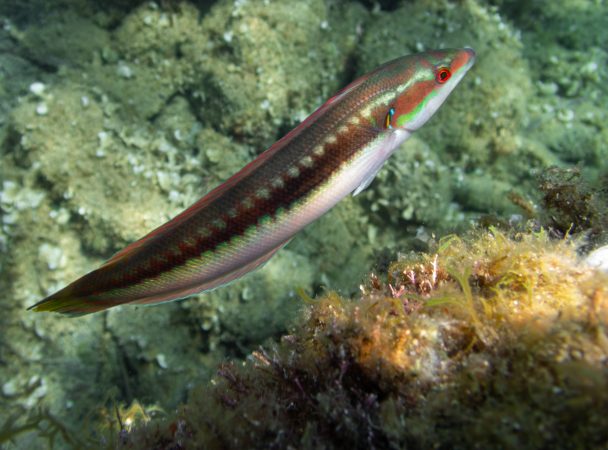
Coris julis

Rocky fish communities

Acoustic telemetry

Movement ecology

Community ecology

Behavioral ecology

Bioacoustics

Context

Fish communities emerge from the behaviour of individual animals interacting with their physical environment and with other organisms. Yet, while community ecology traditionally describes patterns of abundance and species composition, the fine-scale behavioural processes generating these patterns in natural ecosystems remain difficult to observe.

Recent developments in high-resolution acoustic telemetry now make it possible to follow multiple individual fishes simultaneously in their natural habitat, revealing where they move, when they are active and how they interact with conspecifics and other species. NETFISH uses a multi-species rocky-reef fish community on the Côte Vermeille as a natural laboratory to investigate how individual behaviour, species interactions and environmental conditions combine to structure marine communities.

Objectives

From individual movements to community-level processes

NETFISH combines high-resolution acoustic telemetry, behavioural ecology, bioacoustics and environmental monitoring to quantify the behaviour of several Mediterranean rocky-reef fish species directly in their natural environment. By following many individuals simultaneously, the project aims to understand how individual movement patterns scale up to interactions among species and, ultimately, to the organisation and resilience of fish communities.
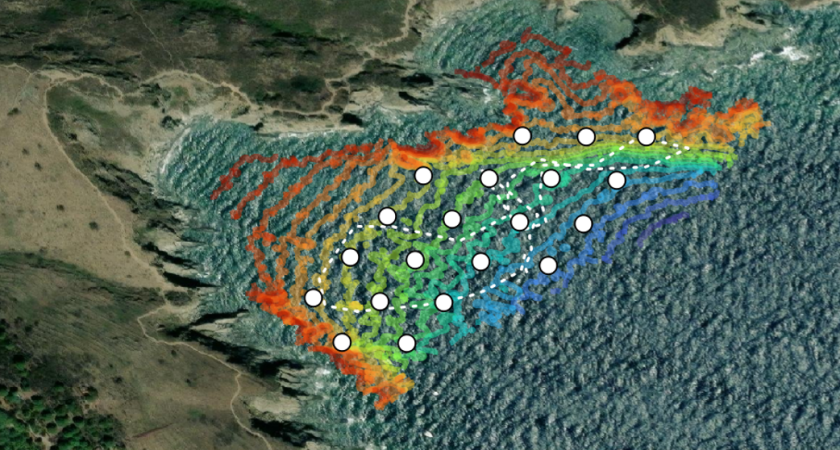
Key questions

1. How do individual fishes use space and time within a rocky-reef ecosystem?

NETFISH investigates fine-scale differences in movement, habitat use and activity among individuals and species, and examines how these behavioural patterns vary across daily and environmental cycles.
Netfish2

2. How do intra- and interspecific interactions structure fish communities?

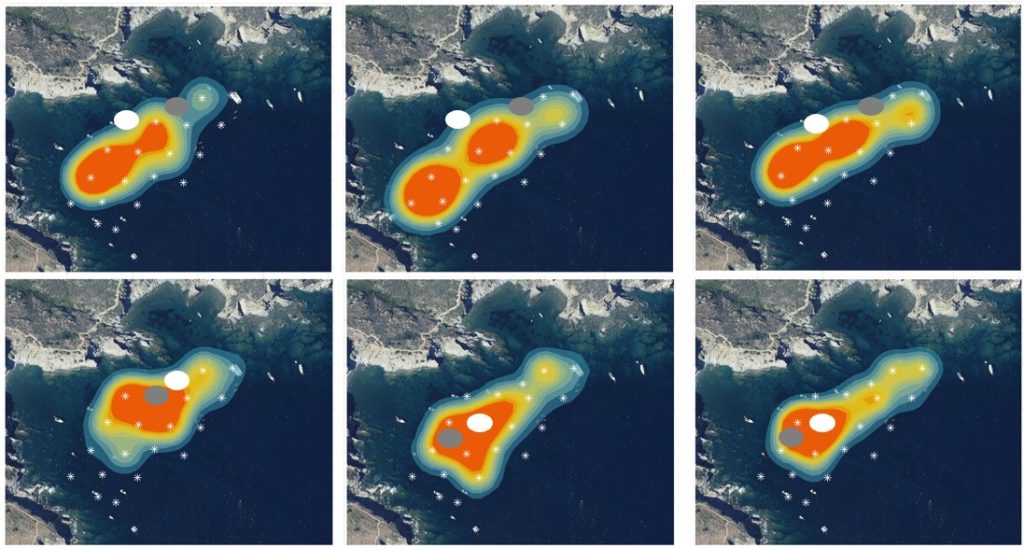
By tracking multiple species simultaneously, we investigate when and where individuals associate, avoid one another or share habitat, and how these behavioural interactions contribute to the spatial organisation of the rocky-reef community.
Marc Besson
Marc Besson

3. How do environmental and anthropogenic disturbances affect fish behaviour and community resilience?

NETFISH examines how environmental variability and human pressures modify individual activity and interactions within the community, with particular attention to factors such as temperature and the local acoustic environment.

From behaviour to community resilience

Behavioural responses to environmental change do not occur in isolation. Changes in the movement or activity of one species can modify encounters with competitors, predators or other members of the community. By simultaneously tracking several rocky-reef species, NETFISH connects individual behaviour with community-level processes under natural conditions.
By linking fine-scale movements, species interactions and environmental conditions, NETFISH aims to identify the behavioural mechanisms underlying changes in community organisation. This approach helps move beyond describing whether a fish community changes under disturbance to understanding how individual behavioural responses may drive those changes.

Project team and partners

MARBEC - Université de Montpellier, CNRS, Ifremer, IRD, INRAE

Johann Mourier - Coordinator
Jérôme Bourjea
Frédéric Bertucci
Anaïs Laurioux - PhD student

Funding

Université de Montpellier

Chaire de Professeur Junior
Johann Mourier

People involved in the EcoEvoDevo team

Related News

Related Publications

Interested in this research?

Our projects regularly involve Master students, PhD candidates and postdoctoral researchers interested in marine Eco-Evo-Devo, ecotoxicology, behaviour and integrative biology.