FILTRE-UV

Biological effects of sunscreen UV filters on clownfish metamorphosis

Project at a glance

2021-2026

Banyuls-sur-Mer (FR)

Amphiprion ocellaris

Ecotoxicology

Eco-Evo-Devo

Environmental chemistry

Fish endocrinology

Context

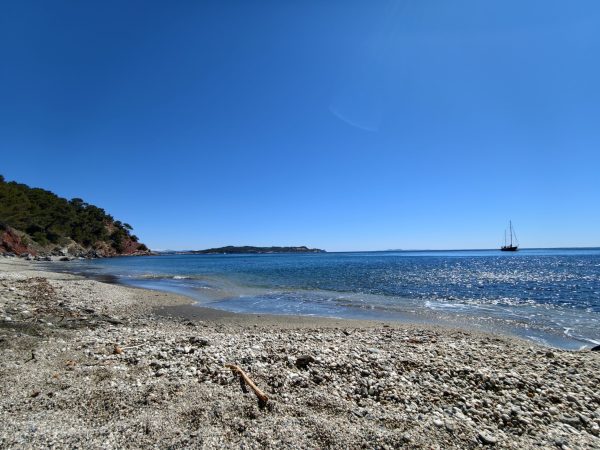
Sunscreens contain organic molecules and mineral nanoparticles designed to absorb or reflect ultraviolet radiation. During recreational bathing, part of these UV filters is released directly into coastal waters, raising questions about their persistence, transformation and potential effects on marine organisms.

Once released, sunscreen ingredients do not necessarily remain in their original form. They can undergo photochemical transformation, interact with natural organic matter and suspended particles, aggregate, remain dissolved or eventually accumulate in sediments. At the same time, concentrations in bathing areas can vary strongly according to human attendance, environmental conditions and local hydrodynamics.

FILTRE-UV investigates the complete environmental trajectory of sunscreen UV filters, from their release into seawater and transformation in the environment to their potential biological effects on the metamorphosis of a marine organism. The project combines controlled laboratory experiments, environmental chemistry, field surveys and experimental ecotoxicology.

Objectives

From environmental contamination to developmental consequences

FILTRE-UV combines environmental chemistry, field monitoring and experimental ecotoxicology to understand what happens to sunscreen UV filters after their release into coastal waters and to assess their potential biological consequences. Within this multidisciplinary project, in the EcoEvoDevo team we focus on how environmentally relevant exposure to these contaminants may affect fish development during the particularly sensitive larva-to-juvenile transition.
Key questions

1. What is the environmental fate of sunscreen UV filters after their release into coastal waters?

Across the FILTRE-UV consortium, mineral and organic UV filters are characterised from their release and transformation in seawater to their distribution across bathing waters, the water column and sediments. Field measurements provide realistic environmental concentrations and exposure scenarios that can subsequently be investigated experimentally.
FUV2

2. Can UV filters disrupt fish metamorphosis?

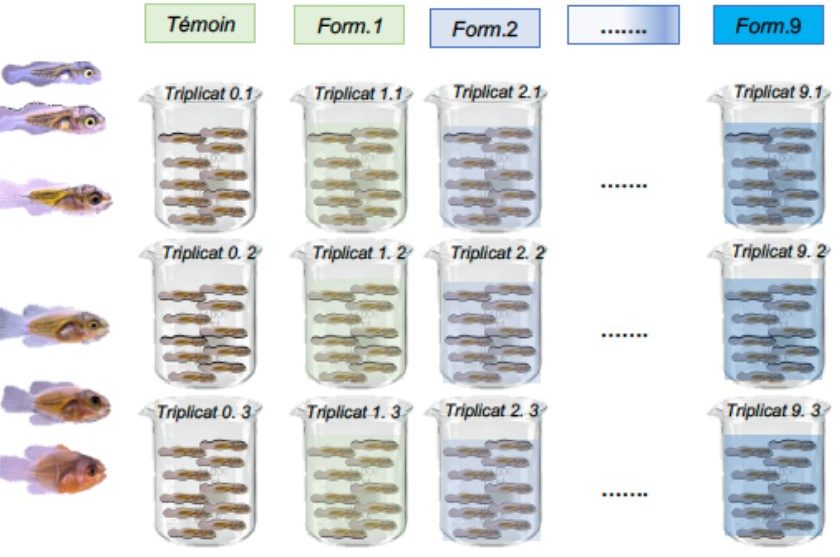
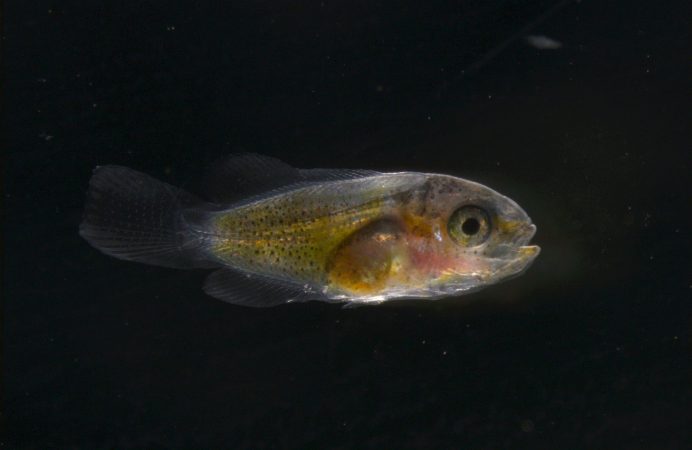
At EcoEvoDevo, we use laboratory-reared Amphiprion ocellaris to test whether UV filters at environmentally relevant concentrations alter the progression of metamorphosis, including larval survival, growth and the morphological changes associated with the transition to the juvenile stage. The project specifically follows traits such as pigmentation and other developmental characteristics known to change during metamorphosis.
FUV1

3. What physiological and molecular mechanisms underlie these developmental effects?

Beyond visible developmental changes, we investigate whether UV-filter exposure affects physiological condition and the molecular programmes controlling metamorphosis, with particular attention to thyroid hormone signalling and developmental gene expression. These complementary endpoints help determine whether apparently subtle exposures can interfere with the mechanisms coordinating the larva-to-juvenile transition.

From environmental contamination to developmental effects

A major strength of FILTRE-UV is its integration of exposure assessment and experimental ecotoxicology. Environmental measurements establish which compounds and concentration ranges actually occur in bathing areas, while controlled experiments allow their biological effects to be tested independently. By connecting sunscreen formulation, environmental fate, real-world exposure and developmental responses, the project aims to provide a more realistic assessment of the ecological risks associated with sunscreen UV filters.

Why clownfish?

The complete life cycle of Amphiprion ocellaris can be reproduced under controlled laboratory conditions, allowing exposure to environmental contaminants to be precisely combined with a well-characterised developmental sequence. Its metamorphosis involves conspicuous changes in morphology and pigmentation and is regulated by thyroid hormone signalling, providing complementary phenotypic and molecular markers to detect subtle developmental disturbances.

Project team and partners

CEREGE - Aix-Marseille Université, CNRS, IRD, INRAE

Jérôme Labille - Coordinator
Delphine Thallinger - PhD student

CEA - Liten

Sylvie Motellier

BIOM - CNRS, Sorbonne Université

Laurence Besseau
Julie Lherbeil

Funding

ANSES - Project 2021-EST126

FILTRE-UV — Emission, fate and environmental effects of UV filters from sunscreens: benefits and risks of chemical or nanoparticulate substances

People involved in the EcoEvoDevo team

Related News

Related Publications

Interested in this research?

Our projects regularly involve Master students, PhD candidates and postdoctoral researchers interested in marine Eco-Evo-Devo, ecotoxicology, behaviour and integrative biology.